
Enabling Nigeria's Transition to Bank Holding Company Structures
Following banking sector reforms after the global financial crisis, the Central Bank of Nigeria directed universal banks to divest non-core businesses or adopt a holding company structure. While the reform aimed to reduce systemic risk, regulators faced a critical challenge: supervising complex financial groups required new legal frameworks, regulatory tools, and technical expertise.
THE OPPORTUNITY
Learning from Global Best Practice in Holding Company Supervision
As Nigerian banks began restructuring into financial holding companies, regulators needed a deeper understanding of how consolidated banking groups are regulated in advanced financial systems. The transition raised complex policy questions around licensing standards, corporate governance, capital requirements, and group-wide risk management.
Mindset Resource Consulting identified an opportunity to strengthen regulatory readiness by facilitating direct knowledge transfer from experienced international supervisors. In partnership with the Federal Reserve Bank of Kansas City, the programme aimed to expose Nigerian regulators to the legal, supervisory, and institutional frameworks governing bank holding companies in the United States.
By examining real-world supervisory practices and engaging directly with regulators and financial institutions, the initiative sought to equip the Central Bank with the technical and policy insights required to oversee Nigeria’s emerging holding company landscape.
THE SOLUTION
Building Regulatory Capability Through International Exposure and Practical Learningn
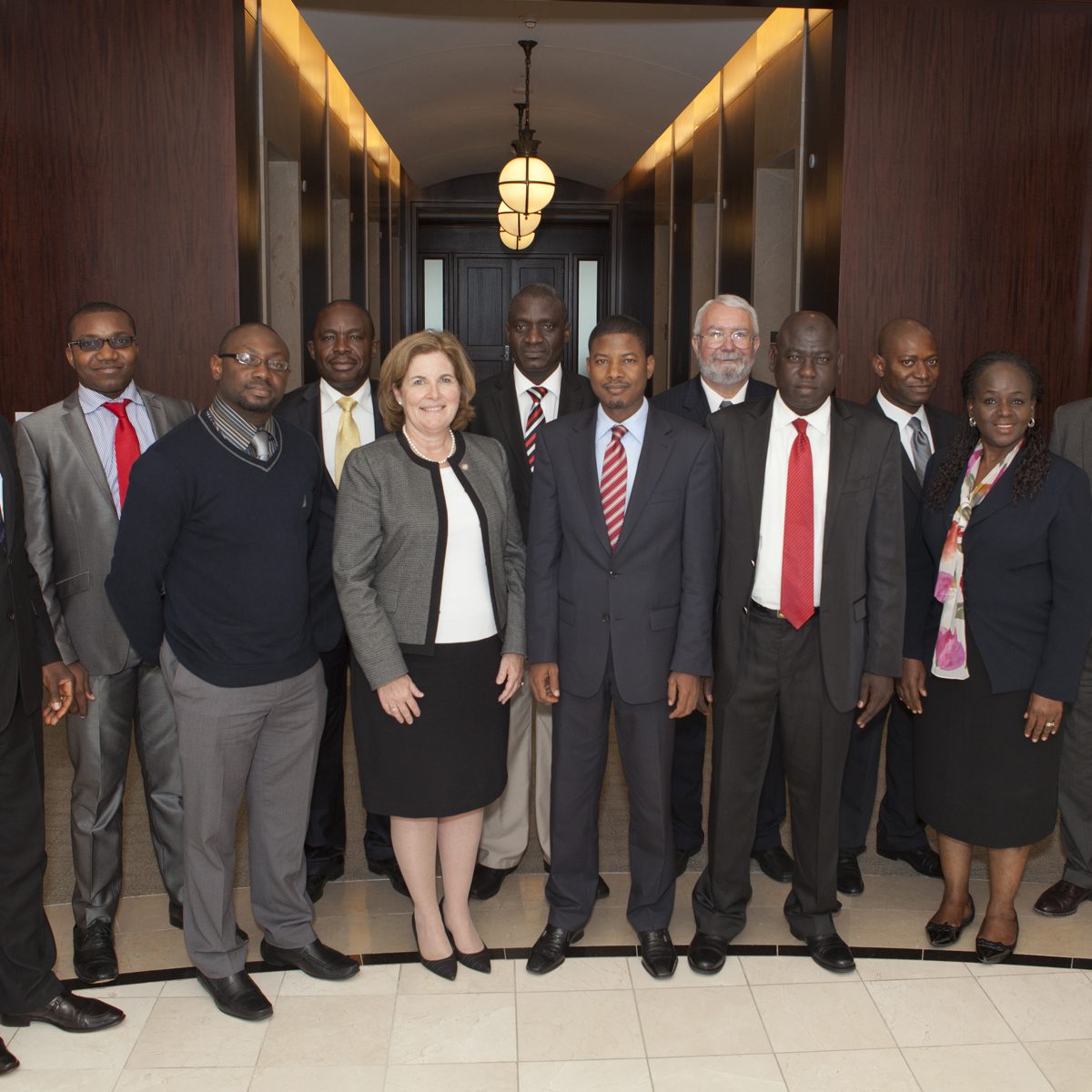
Mindset Resource Consulting designed and delivered a one-week executive seminar in Kansas City for senior officials from the Banking Supervision and Financial Policy departments of the Central Bank of Nigeria. The programme combined expert-led technical sessions, case studies, and practical discussions with U.S. regulatory authorities to provide a comprehensive understanding of bank holding company regulation.
The seminar was delivered in collaboration with specialists from the Federal Reserve Bank of Kansas City, including senior supervisors, economists, and policy experts responsible for overseeing bank holding companies across the Federal Reserve System. Participants explored the historical evolution of holding company regulation in the United States, including the legal foundations provided by landmark legislation such as the Bank Holding Company Act and subsequent financial reforms.
Technical sessions focused on the regulatory and supervisory requirements governing the formation, licensing, and expansion of bank holding companies. Participants examined the approval standards for acquisitions and mergers, capital adequacy requirements for consolidated entities, and the mechanisms regulators use to evaluate financial and managerial resources when approving structural changes.
A central component of the programme addressed consolidated supervision and examination practices. Nigerian regulators were introduced to supervisory rating systems, reporting requirements, and inspection procedures used to assess the safety and soundness of complex banking groups. Discussions also explored enterprise risk management across financial conglomerates, including credit risk, liquidity risk, operational risk, governance oversight, and intra-group exposures.
The programme further addressed cross-border regulatory challenges arising from the international expansion of Nigerian banks. Participants examined the coordination required between home and host regulators when supervising multinational banking groups operating across multiple jurisdictions.
To complement the technical training, participants undertook a study visit to UMB Financial Corporation, where they observed the practical governance structures and operational oversight of a financial holding company in practice.
Through this blend of policy dialogue, technical instruction, and institutional exposure, the programme provided Nigerian regulators with actionable insights to support the design of a robust regulatory framework for financial holding companies.


THE IMPACT
Strengthening Nigeria's Holding Company Supervision Framework
The programme significantly strengthened the capacity of Nigerian regulators to oversee complex banking group structures. Exposure to U.S. supervisory practices enhanced regulators’ understanding of licensing requirements, governance standards, and consolidated risk management frameworks required for effective oversight of financial holding companies.
Insights from the programme directly informed the development of Nigeria’s Financial Holding Company Policy, providing clarity on formation standards, reporting requirements, and supervisory expectations. Regulators also developed practical supervisory handbooks to guide consistent examination and monitoring of holding companies.
The initiative improved the Central Bank’s ability to identify risks associated with conglomerate structures—including regulatory arbitrage, contagion risk, and governance weaknesses—reducing vulnerabilities during the banking sector’s structural transition.
By strengthening consolidated supervision and aligning regulatory practices with international standards, the programme contributed to a more resilient Nigerian banking system, enhanced investor confidence, and a more stable foundation for financial sector development.